
The finance ministry has initiated an internal survey of the faceless regime to examine its effectiveness.

The Reserve Bank of India (RBI) has increased its gold purchases, as part of its foreign exchange (forex) reserves. In the first half (H1) of calendar year 2021 (CY21), the addition of gold to India's forex reserves has been the highest - on a half-yearly basis -at 29 tonnes. Now, the RBI's gold holding - as a proportion of its forex reserves - has for the first time crossed 700 tonnes.

The government is exploring legal options, including bringing an Ordinance, to tackle the problem of income-tax litigation on reassessment notices under old, time-barred norms, according to official sources. This has come in the wake of writ petitions filed by companies and individuals in recent weeks to challenge the validity of the notices issued by the tax department between April 1 and June 30 and under the old norms.

Now that almost 10 infrastructure ministries have submitted a fresh list of their core infrastructure assets, the government has realised it stands to make much more money from asset monetisation than previously thought. Two persons in the government said it stood to garner over 30 per cent more than the earlier estimates of Rs 2.5 trillion over the next four years under the National Monetisation Pipeline (NMP). The NMP, which is being prepared by Niti Aayog, is in the advanced stages of finalisation and is expected to be unveiled in August.
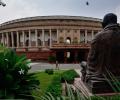
The much-anticipated cryptocurrency bill, however, is missing from the list, reports Shrimi Choudhary.

Maintaining a rapid pace of the vaccination drive and quickly bridging healthcare infrastructure gaps across both urban and rural areas would emerge as the most sustainable stimulus for durable recovery of the Indian economy, says a report by the department of economic affairs.

The probe agency is learnt to have taken possession of multiple physical and digital records during a search operation conducted on the premises of the South Korean firm in Delhi and Mumbai this week.
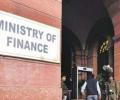
The finance ministry on Wednesday reimposed expenditure curbs on ministries and government departments for July-September quarter. There will be no spending restrictions on the ministries of health, rural development, agriculture, MSME (micro, small and medium enterprises) and railways as part of a two-pronged strategy. "The existing guidelines for expenditure control have been reviewed. "Keeping in view the evolving situation arising out of Covid-19 and anticipated cash position of the government, it is felt essential to regulate Quarterly Expenditure Plan (QEP)/Monthly Expenditure Plan (MEP) of specific ministries/departments for July-September, 2021," the Department of Economic Affairs in the finance ministry said in a notification.

Direct economic stimulus measures such as tax cuts for individuals and industry would have helped to prop up the Indian economy which was hit hard by the lockdowns across several states in India, say economists and corporate leaders. While the measures announced on Monday are focussed more on the supply side, these steps would take a lot of time to move the needle for the economy.

The Goods and Services Tax (GST) Council, chaired by Union Finance Minister Nirmala Sitharaman, will likely consider on Saturday a GST rate cut for Covid-19 relief essentials and drugs for treating the black fungus disease and might leave the vaccines untouched. The meeting is being held following a report submitted by a Group of Ministers (GoM) to the GST Council on Monday. The GoM, set up by the Council on May 28, was mandated to look at tax exemption and concessions on various Covid items including vaccines, drugs, and equipment.

'I would recommend two parts to fiscal support. One, support the lower end of the society by direct intervention through ways such as direct benefit cash transfer. Second, give fiscal support to the stressed sectors in line with the Rs 3-lakh crore (Rs 3 trillion) emergency credit line guarantee norms'

India's economy is unlikely to see double-digit growth and may grow between 8 per cent and 9 per cent this fiscal year (2021-22, or FY22), against the estimated 11.5 per cent, according to leading economists and rating agencies. The downward revision of growth projections to as low as 10 per cent is mostly on account of stringency in restrictions by states, relatively slow vaccination pace, and the possibility of a third wave of the pandemic. However, they say the impact will not be as severe as the first wave, and expect the first quarter to see positive growth.

The two central premier investigative agencies - Central Bureau of Investigation and Enforcement Directorate - have asked their officials to focus more on digital evidence, e-forums and social media to crack down on offenders. These are a crucial part of prosecution amid the second wave of the pandemic. The Income Tax Department is going full throttle on data analytics to issue notices in time-bound cases. Further, sleuths have been given electronic devices including laptops with secure connections, which keep data encrypted and inaccessible.

The finance ministry has asked the tax department to impose hefty penalties on those hospitals found with unaccounted cash, and such entities could be booked under anti-money laundering laws and prosecuted, reports Shrimi Choudhary.

The Maharashtra police has booked Indiabulls group companies, including its flagship Indiabulls Housing Finance (IBHL), for allegedly siphoning off funds and for accounting irregularities committed by the promoters and directors of the company between 2014 and 2020. A first information report was registered by the Palghar police on April 13 under various sections of Indian Penal Code dealing with cheating, fraud and criminal conspiracy. The move comes after Palghar's judicial magistrate passed an order under Section 156 (3) of the Code of Criminal Procedure (power to direct police/agency to investigate the matter), following a complaint filed by Ashutosh Kamble, a shareholder of IBHL.
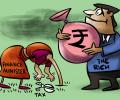
'Quite a few notices have been issued in both black money and benami transactions.'

The government is considering a provision to provide an exit window to holders of cryptocurrencies (cryptos), keeping in mind that banning them outright could deal a blow to investors sitting on them for years. According to sources in the government, the framework in the making may propose a grace period of three to six months for investors before prohibiting the possession, trading, mining, and issuing of cryptos. A group of secretaries chaired by the Cabinet secretary is learnt to have met in mid-March and discussed issues associated with cryptos, including the consequences of banning them and also on possible substitutes of blockchain technology - an advanced technology Bitcoin uses.

The idea is to do away with the need for the approval of the Core Group of Secretaries on Divestment for privatisation of companies, especially in non-strategic sectors.

The government is considering blocking internet protocol (IP) addresses of companies/exchanges on which trading in cryptocurrencies is happening, said a source in the know. Two months ago, the government had said it intended to bring a Bill to ban private cryptocurrencies and introduce India's own digital currency in line with what China and other countries had done. This move is part of that. The government had also proposed to promote technology like blockchain. Industry, however, says banning decentralised currencies like bitcoin and ethereum is not possible.
 © 2026 Rediff.com - Advertise with us - Disclaimer - Privacy Policy - Sitemap - Feedback - About us - Terms of use - Grievances